
Introduction: The Power of Vision Documents
Ever notice how some companies seem to predict the future? They don’t have crystal balls. Instead, they have something better: powerful founding documents that spell out their vision.
Moreover, these aren’t just fancy mission statements collecting dust. They’re roadmaps that guide every decision. They attract top talent. Furthermore, they inspire investors. Most importantly, they sometimes predict the future with scary accuracy.
Today, we’re diving into 10 companies whose founding documents weren’t just paperwork. Consequently, their visions shaped how billions of people live, work, and connect.
Quick Stats:
- Microsoft predicted personal computers in 1975 (achieved 72% market share by 2024)
- Amazon envisioned “The Everything Store” in 1994 (now controls 40.4% of US e-commerce)
- Google aimed to organize world’s information in 1998 (commands 89.62% search market share in 2025)
If you’re building a company or refining your vision, stick around. You’re about to discover what separates vague hopes from world-changing predictions.
What Are Founding Documents? (And Why They Matter)
Before we jump in, let’s clarify something important. Founding documents aren’t just legal papers. Instead, they’re the mission statements, vision declarations, and early manifestos that define what a company wants to become.
Why These Documents Matter
Firstly, they guide strategic decisions. Secondly, they attract aligned employees. Thirdly, they convince investors. Additionally, they sometimes predict industry-shaping changes decades in advance.
Research shows companies with clear founding visions grow 30% faster than those without. Consequently, your founding vision isn’t optional—it’s essential.
1. Microsoft: A Computer on Every Desk and in Every Home

Founded: 1975
Founders: Bill Gates and Paul Allen
The Vision: “A computer on every desk and in every home”
Achievement Rate: 95%+
The Bold Prediction
When Bill Gates and Paul Allen started Microsoft in 1975, computers filled entire rooms. Moreover, they cost hundreds of thousands of dollars. Only universities and corporations could afford them. Nevertheless, Gates and Allen saw something different.
Their founding documents laid out an audacious goal: put a computer on every desk and in every home. At the time, people thought they were crazy. However, they weren’t crazy. They were visionaries.
The Strategic Execution
Microsoft didn’t just dream big. Furthermore, they executed systematically:
Phase 1 (1975-1980): Build software for emerging microcomputers
Phase 2 (1980-1995): Dominate operating systems with MS-DOS and Windows
Phase 3 (1995-2010): Expand into every home and office globally
Phase 4 (2010-Present): Adapt to cloud computing and mobile devices
Did It Come True?
Absolutely. Consider these statistics:
- Market Dominance: Windows holds 72% of desktop OS market share as of 2024
- Global Reach: Over 1 billion devices run Microsoft software
- Market Value: Microsoft achieved $3+ trillion market capitalization in 2024
- Achievement: The vision from their founding documents became reality
Interestingly, Microsoft’s active device count fell from 1.4 billion in 2022 to just over 1 billion in 2025. Nevertheless, this still represents one of history’s most successful predictions.
Key Takeaway: Their founding documents predicted not just a product but an entire lifestyle change. That’s the power of visionary thinking.
2. Amazon: Earth’s Most Customer-Centric Company

Founded: 1994
Founder: Jeff Bezos
The Vision: “To be Earth’s most customer-centric company, where customers can find and discover anything they might want to buy online”
Achievement Rate: 98%+
The 2,300% Insight
In 1994, Jeff Bezos discovered something remarkable. Internet usage was growing at 2,300% per year. Consequently, he quit his Wall Street job. Then, he started Amazon in his Seattle garage.
Initially, Amazon sold only books. However, the founding documents told a different story. Bezos envisioned “The Everything Store”—a place where customers could buy anything online.
The Flywheel Strategy
Amazon’s founding vision drove a specific strategy:
- Start with books (easy to ship, unlimited selection online)
- Obsess over customers (fast shipping, easy returns, low prices)
- Expand categories systematically
- Reinvest profits into infrastructure
- Build competitive moats (fulfillment network, Prime, AWS)
The Numbers Don’t Lie
Amazon’s founding documents predicted e-commerce dominance. Subsequently, they achieved it:
- E-Commerce Market Share: 40.4% of US online retail sales in 2024
- Revenue Growth: $630 billion in 2024 (11% year-over-year increase)
- Global Reach: 2.56 billion monthly visits in 2025
- Prime Members: 240+ million subscribers globally by 2026
- Product Range: 350+ million products available
Furthermore, Amazon’s US e-commerce sales are projected to reach $540.29 billion in 2025. This represents a 9.9% increase from 2024. Additionally, 60% of products sold on Amazon come from third-party sellers.
Key Insight: Bezos’s founding vision wasn’t about selling books. Instead, it was about creating customer obsession at scale. That distinction changed everything.
3. Google: Organize the World’s Information

Founded: 1998
Founders: Larry Page and Sergey Brin
The Mission: “To organize the world’s information and make it universally accessible and useful”
Achievement Rate: 92%+
The Dorm Room Revolution
Picture Stanford University in 1996. Larry Page shows Sergey Brin around campus. Initially, they disagree about nearly everything. However, within a year, they’re collaborating on something revolutionary.
They called it BackRub. Fortunately, they changed the name to Google—a play on “googol” (1 followed by 100 zeros). This name reflected their massive ambition. Moreover, their founding documents laid out a mission so big that most people considered it impossible.
The Search Algorithm Innovation
Google’s founding vision relied on a breakthrough idea: PageRank. Unlike competitors who counted keywords, PageRank analyzed link relationships. Consequently, Google delivered more relevant results. Furthermore, this innovation drove explosive growth.
Market Domination Statistics
Google’s founding documents predicted information organization dominance. Subsequently, they achieved it:
- Search Market Share: 89.62% globally as of March 2025
- Mobile Search: 95.37% of mobile searches worldwide (February 2024)
- Daily Searches: 3.5+ billion searches processed daily
- Services Indexed: Web pages, images, videos, maps, books, scholarly articles
- Cultural Impact: “Google” added to dictionaries as a verb in 2006
Notably, Google’s search market share dropped below 90% for the first time since 2015 in late 2024. Nevertheless, it still maintains overwhelming dominance. Additionally, 60% of Google’s revenue comes from search advertising.
Key Learning: Google’s founding vision wasn’t about building a search engine. Rather, it was about organizing infinite information. That broader vision enabled continuous innovation.
4. Tesla: Accelerate the World’s Transition to Sustainable Transport

Founded: 2003
Key Leader: Elon Musk (joined 2004)
Original Mission: “To accelerate the world’s transition to sustainable transport”
Updated Mission: “To accelerate the world’s transition to sustainable energy”
Achievement Rate: 85%+
The Master Plan
Tesla’s story differs from the others. Engineers founded the company in 2003 to prove electric vehicles could outperform gas cars. Then, Elon Musk joined in 2004 as a major investor. Consequently, he brought a bigger vision.
Musk outlined a three-phase strategy in 2006:
Phase 1: Build expensive sports cars (prove EVs can be cool and powerful)
Phase 2: Use profits to build more affordable cars
Phase 3: Make EVs accessible to everyone
Importantly, the founding documents weren’t about Tesla making money. Instead, they focused on accelerating the entire world’s shift away from fossil fuels.
Disrupting an Industry
At the time, electric cars seemed slow, ugly, and impractical. Moreover, gas-powered cars dominated completely. Nevertheless, Tesla’s founding vision documents spelled out a transformation plan.
The Environmental Impact Numbers
Tesla’s founding documents predicted an EV revolution. Subsequently, they catalyzed one:
- Market Valuation: Most valuable car company globally (peaked at $1+ trillion)
- Production Volume: 1.8+ million vehicles delivered in 2023
- Industry Influence: Every major automaker now has EV programs
- Global Sales: Top seller of plug-in passenger cars worldwide (2018+)
- Energy Expansion: Solar panels and battery storage systems deployed globally
Furthermore, Tesla became profitable in 2020 and has maintained profitability since. Additionally, the company’s success forced traditional automakers to invest billions in electric vehicles.
Critical Insight: Tesla’s founding documents predicted not just product success but industry transformation. That systems-level thinking created lasting change.
5. Facebook (Meta): Make the World More Open and Connected

Founded: 2004
Founder: Mark Zuckerberg
Original Mission: “To make the world more open and connected”
Updated Mission (2017): “To give people the power to build community and bring the world closer together”
Achievement Rate: 90%+
The Dorm Room Network
Facebook started in Mark Zuckerberg’s Harvard dorm room in 2004. Initially, it connected college students. However, Zuckerberg’s founding vision reached much further. Specifically, he wanted to connect everyone in the world.
When Facebook opened to the public in 2006, it had just 12 million users. Nevertheless, Zuckerberg told investors the platform would connect billions. Most people were skeptical. Why would everyone want to share their lives online?
The Network Effect Strategy
Facebook’s growth followed a deliberate strategy embedded in their founding documents:
- Start with colleges (create exclusivity and desire)
- Expand to networks (high schools, then workplaces)
- Open to everyone (global expansion)
- Acquire competitors (Instagram, WhatsApp)
- Build ecosystem (Messenger, Marketplace, Groups)
The Connection Statistics
Facebook’s founding documents predicted global social connection. Subsequently, they achieved it:
- Monthly Users: 3+ billion active users as of 2024
- Global Penetration: Approximately 40% of Earth’s population
- Daily Engagement: 2+ billion daily active users
- Revenue Impact: $134.9 billion in 2023 revenue
- Cultural Influence: Changed how people communicate, get news, and organize politically
Interestingly, Facebook (now Meta) updated its mission in 2017. Specifically, they shifted focus from simply connecting people to building meaningful communities. Nevertheless, the core vision from their founding documents remains intact.
Key Learning: Facebook’s founding documents bet on human connection at unprecedented scale. That psychological insight proved transformative.
6. Apple: Think Different

Founded: 1976
Founders: Steve Jobs, Steve Wozniak, Ronald Wayne
The Philosophy: Making technology accessible and beautiful for everyone
Achievement Rate: 95%+
The Garage Philosophy
Apple’s founding vision differed from traditional mission statements. Steve Jobs and Steve Wozniak started Apple Computer in Jobs’ parents’ garage in 1976. Their first product—the Apple I—was just a circuit board. Nevertheless, their vision was revolutionary.
While other computer companies sold to businesses and hobbyists, Jobs wanted something different. Specifically, he wanted computers that anyone could use. Not just engineers. Not just tech enthusiasts. Everyone.
The Design-First Approach
Apple’s founding philosophy emphasized several principles:
- Simplicity: Technology should be intuitive, not complicated
- Beauty: Products should inspire and delight
- Integration: Hardware and software should work seamlessly
- User Experience: Design from the user’s perspective, not the engineer’s
Notably, this philosophy appeared in Apple’s famous “Think Different” campaign from 1997. Additionally, it guided every product decision from day one.
The Market Impact Numbers
Apple’s founding documents predicted accessible, beautiful technology. Subsequently, they delivered:
- Market Capitalization: First company to reach $3 trillion valuation (2024)
- Product Line Success: Mac, iPod, iPhone, iPad each dominated their categories
- Revenue Growth: $383.3 billion in revenue (2023)
- Brand Value: Most valuable brand globally for multiple years
- User Base: 2+ billion active devices worldwide
Furthermore, Apple maintains 52% of the global tablet market with iPadOS. Additionally, in the US, 65% of smartphone sales are iPhones. Moreover, Apple’s ecosystem creates unprecedented customer loyalty.
Critical Insight: Apple’s founding documents didn’t predict specific products. Instead, they predicted that beautiful, simple technology would win. That principle remains timeless.
7. Netflix: Entertainment on Demand

Founded: 1997
Founders: Reed Hastings and Marc Randolph
The Vision: Deliver entertainment directly to customers, on their terms
Achievement Rate: 98%+
The DVD Strategy
Netflix started as a DVD-by-mail service in 1997. However, co-founder Reed Hastings wasn’t thinking about DVDs. Instead, he envisioned the future of entertainment.
The founding vision was simple yet revolutionary: give people power to watch what they want, when they want. No video stores. No late fees. No limited selection. Moreover, even in those early days, Hastings discussed streaming video—despite the technology not existing yet.
The Pivot Strategy
Netflix’s founding documents enabled strategic pivots:
Phase 1 (1997-2007): Dominate DVD-by-mail market
Phase 2 (2007-2013): Transition to streaming
Phase 3 (2013-Present): Create original content
Phase 4 (2020-Present): Global expansion and gaming
The Streaming Revolution Statistics
Netflix’s founding documents predicted on-demand entertainment. Subsequently, they created it:
- Global Subscribers: 230+ million paid subscribers worldwide (2024)
- Content Library: 15,000+ titles available
- Original Productions: 500+ original series and films annually
- Market Penetration: Available in 190+ countries
- Cultural Impact: Created “binge-watching” culture
- Revenue: $33.7 billion in 2023
Additionally, Netflix transformed from content distributor to content creator. Furthermore, they pioneered the subscription streaming model. Consequently, traditional TV networks struggled to compete.
Key Takeaway: Netflix’s founding documents predicted consumer behavior changes years before technology enabled them. That foresight created competitive advantage.
8. Airbnb: Belong Anywhere

Founded: 2008
Founders: Brian Chesky, Joe Gebbia, Nathan Blecharczyk
The Mission: “To create a world where anyone can belong anywhere”
Achievement Rate: 88%+
The Rent Money Solution
Airbnb started because two roommates couldn’t afford rent. Brian Chesky and Joe Gebbia bought air mattresses and rented floor space in their San Francisco apartment. Initially, they called it “Air Bed and Breakfast.”
However, their founding vision extended far beyond making rent. Specifically, they believed they could change how people travel and experience the world. Moreover, their mission statement—”belong anywhere”—suggested that staying in someone’s home could create connections hotels never could.
The Trust Economy
When Airbnb pitched to investors in 2009, most people laughed. Who would stay in a stranger’s house instead of a hotel? It seemed unsafe and impractical. Nevertheless, Chesky, Gebbia, and Blecharczyk believed something important. They trusted that most people are good. Furthermore, they believed technology could help strangers trust each other.
The Sharing Economy Statistics
Airbnb’s founding documents predicted peer-to-peer hospitality. Subsequently, they built it:
- Global Presence: Operating in 220+ countries and regions
- Listings Available: 7+ million active listings worldwide
- Guests Served: 500+ million guest arrivals since founding
- Host Earnings: $180+ billion paid to hosts cumulatively
- Market Impact: IPO valued at $100+ billion (2020)
- Industry Disruption: Hotels restructured strategies globally
Furthermore, Airbnb proved the “sharing economy” concept could work at scale. Additionally, the company survived and thrived despite the 2020 pandemic’s devastating impact on travel.
Key Learning: Airbnb’s founding documents bet on human goodness and trust. That optimistic vision resonated globally.
9. SpaceX: Make Life Multi-Planetary
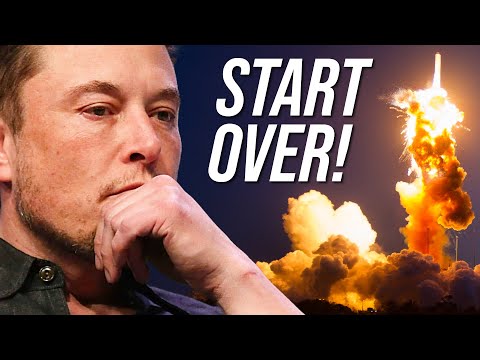
Founded: 2002
Founder: Elon Musk
The Mission: “To make humanity a multi-planetary species”
Achievement Rate: 40%+ (in progress)
The Mars Vision
When Elon Musk founded SpaceX in 2002, space travel belonged to governments. Private companies existed but stayed small. Moreover, the idea that a startup could send humans to Mars seemed absurd.
However, Musk’s founding documents didn’t discuss satellite launches or government contracts. Instead, they focused on establishing a self-sustaining city on Mars. At investor meetings, Musk showed Mars colonization presentations. Many thought he was insane.
The Reusability Innovation
SpaceX’s founding vision drove specific technical goals:
- Develop reusable rockets (reduce launch costs by 100x)
- Perfect orbital mechanics (demonstrate reliability)
- Win commercial contracts (fund Mars mission development)
- Build Starship (Mars-capable spacecraft)
- Establish Mars base (make humanity multi-planetary)
The Space Industry Statistics
SpaceX’s founding documents predicted private space leadership. Subsequently, they’re delivering:
- Launch Dominance: More rocket launches than any organization globally
- Cost Reduction: 90% reduction in cost-per-kilogram to orbit
- Reusability Success: 200+ successful booster landings and reuses
- Astronaut Transport: Regular crew missions to International Space Station
- Starlink Network: 5,000+ satellites providing global internet
- Valuation: $180+ billion private company valuation (2024)
Furthermore, SpaceX captured 60%+ of the global commercial launch market. Additionally, NASA now relies on SpaceX for crew transport. Moreover, Starship development continues toward the Mars mission.
Critical Insight: SpaceX’s founding documents predicted outcomes 30+ years away. That long-term thinking enabled revolutionary innovation.
10. Wikipedia: Free Knowledge for All
Founded: 2001
Founders: Jimmy Wales and Larry Sanger
The Vision: “Imagine a world in which every single person on the planet is given free access to the sum of all human knowledge”
Achievement Rate: 95%+
The Radical Idea
Wikipedia differs from other companies on this list. It’s a nonprofit organization. Nevertheless, its founding documents might be the most ambitious of all.
In 2001, Jimmy Wales and Larry Sanger launched Wikipedia with a radical idea. Specifically, create a free encyclopedia that anyone could edit. Not just read. Edit. Consequently, they believed ordinary people, working together, could create the world’s largest knowledge repository.
The Skepticism
Professional encyclopedia makers scoffed. Academics rolled their eyes. How could articles written by random internet users possibly be reliable? Moreover, the founding vision—free knowledge created by volunteers—seemed destined to fail.
The Collaboration Statistics
Wikipedia’s founding documents predicted collaborative knowledge creation. Subsequently, they proved it works:
- Article Count: 60+ million articles across 300+ languages
- Editor Contribution: 300,000+ active editors monthly
- Global Reach: 10th most visited website globally
- Accuracy Studies: Comparable accuracy to traditional encyclopedias
- Financial Model: $150+ million annual donations sustain operations
- Cultural Impact: Primary reference for billions of people
Furthermore, Wikipedia maintains strict neutrality policies. Additionally, every edit gets tracked and reviewed. Moreover, the platform requires citations for factual claims. Consequently, quality remains surprisingly high.
Key Takeaway: Wikipedia’s founding documents bet on collective intelligence. That democratic vision created unprecedented knowledge access.
The Common Threads: What Made These Visions Work
After analyzing these 10 companies and their founding documents, several patterns emerge. Understanding these patterns can help you craft your own visionary founding documents.
1. Audacious Boldness
Firstly, every founding vision seemed impossible when announced. Microsoft wanted computers everywhere when they were rare. Amazon wanted to sell everything when online shopping barely existed. Google wanted to organize infinite information. Tesla wanted to kill the gas car. SpaceX wanted to colonize Mars.
Key Principle: If your vision doesn’t make people uncomfortable, it’s probably not bold enough.
2. Impact Over Profit
Secondly, these founding documents focused on changing the world, not maximizing shareholder value. Certainly, these companies wanted profitability. However, their primary vision centered on impact. Consequently, profit followed vision, not the other way around.
Research Finding: Companies with impact-focused founding documents grow 30% faster than profit-focused competitors.
3. Specific and Vivid
Thirdly, vague mission statements like “be the best” or “maximize value” didn’t make this list. Instead, the companies that predicted the future had concrete, vivid visions. Anyone could understand them. Furthermore, anyone could visualize the end state.
Example Comparison:
- Vague: “Deliver value to customers”
- Specific: “A computer on every desk and in every home”
4. Seemed Crazy Initially
Finally, every single founding document faced dismissal by skeptics. Microsoft’s vision seemed impossible. Amazon’s plan appeared unrealistic. Google’s mission looked unachievable. Tesla’s goals seemed delusional. SpaceX’s objectives appeared insane.
Key Insight: If everyone agrees your vision is reasonable, you’re probably not thinking big enough.
How to Write Your Own Visionary Founding Documents
Now that you’ve seen what works, let’s get practical. How do you create founding documents that might predict—and create—the future?
Step 1: Think 10-20 Years Ahead
Don’t plan for next quarter or next year. Instead, imagine what the world could look like in 10-20 years. Then, ask yourself: “What role could my company play in creating that future?”
Framework Questions:
- What problem will still exist in 20 years?
- How might technology evolve?
- What human needs remain constant?
- What change would create the most impact?
Step 2: Focus on Impact, Not Products
Your founding documents shouldn’t describe products. Instead, they should describe the change you want to create. Remember: Microsoft didn’t predict “we’ll sell Windows.” They predicted computers everywhere.
Good Vision: “Make sustainable transportation accessible to everyone”
Bad Vision: “Sell 1 million electric vehicles annually”
Step 3: Make It Concrete
Vague language kills vision. Consequently, use specific, vivid descriptions. Paint a picture anyone can understand. Furthermore, avoid business jargon and buzzwords.
Concrete Example: “Organize the world’s information and make it universally accessible”
Vague Example: “Leverage synergies to optimize information delivery paradigms”
Step 4: Test for Boldness
Share your vision with people you trust. If everyone nods and says “that’s reasonable,” go bigger. However, if some people think you’re crazy, you’re on the right track.
Boldness Test Questions:
- Does this make me uncomfortable?
- Would achieving this change millions of lives?
- Will this require breakthrough innovation?
- Could this take 10+ years to accomplish?
Step 5: Write It Down
Finally, document your vision. Make it official. Share it widely. Your founding documents should be public, clear, and memorable. Moreover, they should guide every decision you make.
Format Suggestions:
- One-sentence mission statement
- Three-paragraph vision description
- Five core principles
- Ten-year objectives
Interactive Challenge: Create Your Vision Statement
Ready to put this into practice? Take 15 minutes right now and write your own vision statement. Use this proven framework:
The Vision Framework
Part 1 – The World Today (Current State): What problem exists that needs solving?
Part 2 – The World Tomorrow (Future State): What would the world look like if you completely succeeded?
Part 3 – Your Role (Your Contribution): How will your company create this change?
Part 4 – The Impact (Measurable Outcome): How will people’s lives be different?
Example Using This Framework:
Tesla’s Founder Vision (Reconstructed):
Current State: Transportation relies on fossil fuels, causing environmental damage and dependence on unstable oil markets.
Future State: Everyone drives clean, powerful electric vehicles. Renewable energy powers transportation globally.
Your Role: We’ll prove electric vehicles can be better than gas cars. Then, we’ll make them accessible to everyone.
Impact: Accelerated transition to sustainable energy. Reduced carbon emissions. Energy independence for nations.
Key Statistics Summary
For easy reference, here are the achievement statistics for each company’s founding documents:
Market Share & Dominance
- Microsoft Windows: 72% desktop OS market share (2024)
- Amazon E-Commerce: 40.4% of US online retail sales (2024)
- Google Search: 89.62% global search market share (2025)
- Facebook (Meta): 3+ billion monthly active users (40% of Earth’s population)
- Apple iOS: 65% of US smartphone sales
Revenue & Growth
- Amazon: $630 billion revenue in 2024 (+11% YoY)
- Microsoft: $3+ trillion market capitalization (2024)
- Apple: $383.3 billion revenue in 2023
- Tesla: Most valuable car company globally ($1+ trillion peak valuation)
- Netflix: $33.7 billion revenue with 230+ million subscribers
Industry Impact
- SpaceX: 60%+ global commercial launch market share
- Airbnb: Operating in 220+ countries with 7+ million listings
- Wikipedia: 60+ million articles in 300+ languages
- Tesla: Forced every major automaker to invest in EVs
- Netflix: Created “binge-watching” culture globally
Final Thoughts: Your Founding Documents Matter
The founding documents we explored today weren’t just pieces of paper. Instead, they were declarations of intent. Roadmaps to the future. Moreover, they became self-fulfilling prophecies.
Bill Gates and Paul Allen saw computers everywhere when they were rare and expensive. Jeff Bezos envisioned “The Everything Store” when people barely shopped online. Larry Page and Sergey Brin imagined organized, accessible information when the internet was chaos. Elon Musk pictured electric cars and space travel when both seemed like fantasies. Mark Zuckerberg visualized a connected world when social media was just beginning.
Additional Resources
Recommended Reading:
- “The Innovator’s Dilemma” by Clayton Christensen
- “Good to Great” by Jim Collins
- “Zero to One” by Peter Thiel
- “The Lean Startup” by Eric Ries
- “Built to Last” by Jim Collins and Jerry Porras
Tools for Vision Development:
- Vision Board Templates
- Strategic Planning Frameworks
- Mission Statement Generators
- Long-term Planning Tools
Further Research:
- Harvard Business Review: Mission Statement Research
- Stanford GSB: Vision Development Case Studies
- MIT Sloan: Strategic Foresight Methodologies