
Pop quiz: What do ventriloquist dummies, burnt toast, and human hair have in common?
They all have museums dedicated to them.
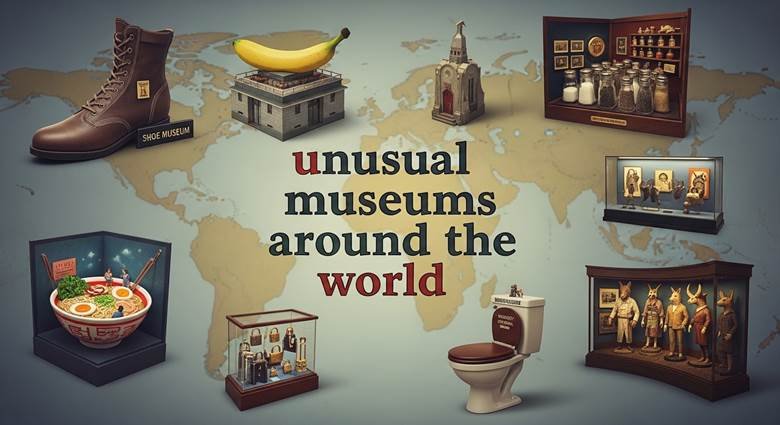
Yes, you read that right. While most people think of museums as places filled with Renaissance paintings or ancient artifacts, there’s a whole world of unusual museums around the world that celebrate the weird, the bizarre, and the downright creepy.
We’re not talking about the Louvre or the Smithsonian. We’re talking about museums where you can see:
- Over 900 retired ventriloquist dummies staring at you
- An underwater sculpture park you can only visit with scuba gear
- Thousands of locks of human hair hanging from the ceiling
- Bad art so terrible it’s actually entertaining
- A museum dedicated entirely to one Elvis haircut
These places exist. People visit them. And honestly? They’re some of the most interesting museums you’ll ever experience.
If you’re tired of the same old tourist attractions, this article is for you. If you want to discover places that will make you say “WHAT?” followed by “I HAVE to see that,” keep reading. And if you just want to impress people with the weirdest travel facts ever, you’re in the right place.
Today, we’re exploring 10 of the strangest unusual museums around the world. These aren’t your typical cultural institutions. They’re the result of passionate collectors, eccentric visionaries, and sometimes just plain weird obsessions.
Ready to discover museums you never knew you needed to visit? Let’s go.
Why Strange Museums Are Actually Awesome
Before we dive into the list, let’s talk about why these weird museums matter.
They Celebrate Human Obsession
Every strange museum started with someone who thought, “You know what? The world needs a museum about THIS.” That dedication is fascinating, whether the subject is spoons, pencils, or parasites.
They’re More Memorable Than “Normal” Museums
Be honest: Which will you remember longer—your 47th painting of a Madonna and child, or the museum where stuffed gophers are dressed up like townspeople? Weird sticks in your brain.
They’re Often More Fun
Traditional museums can be exhausting. Walk, read, repeat. Strange museums tend to be interactive, surprising, and genuinely entertaining.
They Connect You with Subcultures
Behind every weird museum is a community of people who REALLY care about that weird thing. These places offer windows into passionate subcultures.
They Make Great Stories
“I went to the Louvre” is nice. “I went to a museum dedicated entirely to ventriloquist dummies and it was terrifying” is a much better dinner party story.
Vent Haven Museum: Where 900 Dummies Watch You
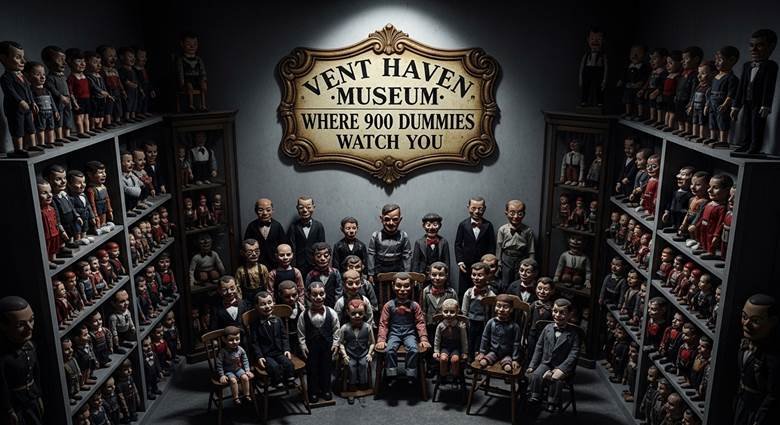
Location: Fort Mitchell, Kentucky, USA
What It Is: The world’s only museum dedicated to ventriloquism
Number of Dummies: Over 900 retired ventriloquist dummies
Hours: By appointment only, May 1 – September 30
The Story
In 1910, William Shakespeare Berger (yes, that was his real name) bought his first ventriloquist dummy: Tommy Baloney. By 1947, his collection had grown so large he had to renovate his garage to house it. By 1962, he needed a second building.
Today, the Vent Haven Museum holds more than 900 ventriloquist dummies, including figures used by famous performers. The collection spans over a century of ventriloquism history, from vaudeville-era dummies to modern figures used by contemporary performers.
Why It’s Weird
Imagine walking into a room filled with hundreds of wooden figures, all with painted faces, all staring at you with their glassy eyes. Some are smiling. Some look angry. Some look… possessed.
Ventriloquism reached its peak in the 1950s and 60s but has seen a resurgence with performers like Jeff Dunham and Darci Lynne Farmer (who won America’s Got Talent). The museum celebrates this art form with everything from antique papier-mâché heads with glass eyes to modern characters like Lamb Chop from television presenter Shari Lewis.
The Experience
Visitors must make appointments to visit. Tours walk you through rows and rows of dummies sitting in seats, stored in cases, and displayed throughout multiple buildings. It’s fascinating, educational, and—let’s be honest—a little creepy.
Fun Fact: The museum has become a pilgrimage site for ventriloquists worldwide. Famous performers like Jeff Dunham and Terry Fator have donated some of their characters to the collection.
The Cancun Underwater Museum (MUSA): Snorkel Through Sculptures
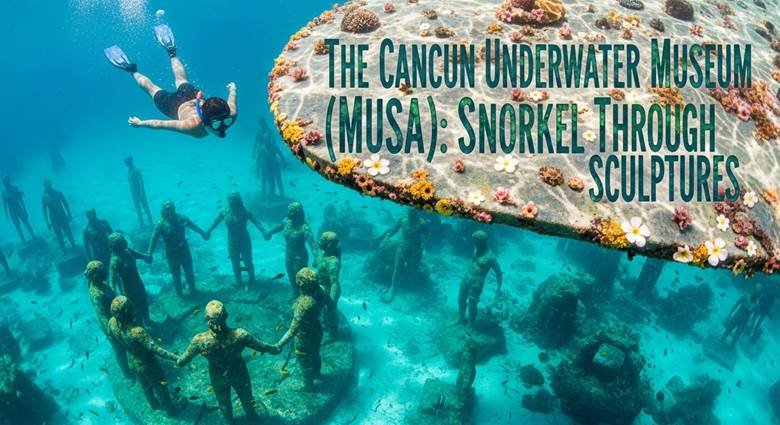
Location: Cancun, Mexico (Caribbean National Marine Park)
What It Is: An underwater sculpture park
Number of Sculptures: Over 500 sculptures in three galleries
Depth: Between 3 and 6 meters (9-20 feet) underwater
The Story
The Cancun Underwater Museum, known as MUSA (Museo Subacuático de Arte), opened in 2010. It’s perhaps the only museum in the world where you need scuba gear or snorkeling equipment to visit.
Located in one of the world’s clearest bodies of water, the Mexican National Marine Park in the Caribbean, MUSA features over 500 sculptures created by various artists. The sculptures depict residents and celebrities of Cancun, Playa del Carmen, and Puerto Juarez, along with abstract installations.
Why It’s Weird
The sculptures aren’t just art—they’re functional. Made from pH-neutral marine materials, they serve as artificial reefs. Over time, coral grows on them, and fish make homes in the structures. The art is literally becoming part of the ocean ecosystem.
Some sculptures are individual figures. Others are installations like “The Silent Evolution,” which features hundreds of human figures standing on the ocean floor. A submerged vehicle sits among the sculptures. Abstract shapes create hiding places for marine life.
The Experience
You can visit MUSA by snorkeling, scuba diving, or glass-bottom boat tours. As you float above the sculptures, you see art slowly being transformed by nature. Coral covers faces. Fish swim through open mouths. Algae creates new patterns on the surfaces.
Conservation Impact: The museum was designed to help preserve Cancun’s natural reefs by attracting divers and snorkelers away from fragile natural formations. It’s proven successful—MUSA attracts over 750,000 visitors annually, taking pressure off natural reefs.
The Museum of Bad Art: Celebrating Terrible Masterpieces
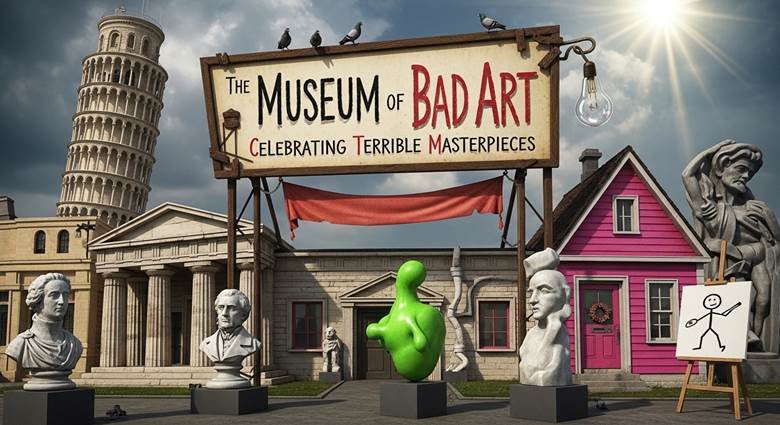
Location: Somerville and Brookline, Massachusetts, USA
What It Is: A museum dedicated to art that’s too bad to ignore
Founded: 1994
Tagline: “Art too bad to be ignored”
The Story
In 1993, antique dealer Scott Wilson found a painting in the trash. It was spectacularly bad—a portrait that somewhat resembled a person, but not really. Most people would’ve left it in the trash. Wilson saw potential.
He started collecting more terrible art. In 1994, he and some friends founded the Museum of Bad Art (MOBA). The mission: to celebrate art that failed so magnificently it deserves recognition.
Why It’s Weird
This isn’t art that’s merely mediocre. MOBA curates pieces that are so bad they transcend badness and become fascinating. The collection includes:
- “Dopplehangers”: Portraits that vaguely resemble famous people (like a melting Jacqueline Kennedy)
- “In the Nood”: Nude portraits that loosely—very loosely—resemble human forms
- Landscapes where perspective is just a suggestion
- Surrealist pieces that are psychotic rather than artistic
MOBA’s public gallery is located inside the Dorchester Brewing Company. You can enjoy a beer while contemplating why someone painted a portrait of a dog with human teeth.
The Standards
MOBA doesn’t accept everything. Pieces must be:
- Sincerely created (no intentionally bad art)
- Seriously flawed in some way
- Compelling despite (or because of) their badness
Notable Pieces: “Lucy in the Field with Flowers” (their most famous piece—a portrait so strange it’s hypnotic) and “Sunday on the Pot with George” (no explanation needed).
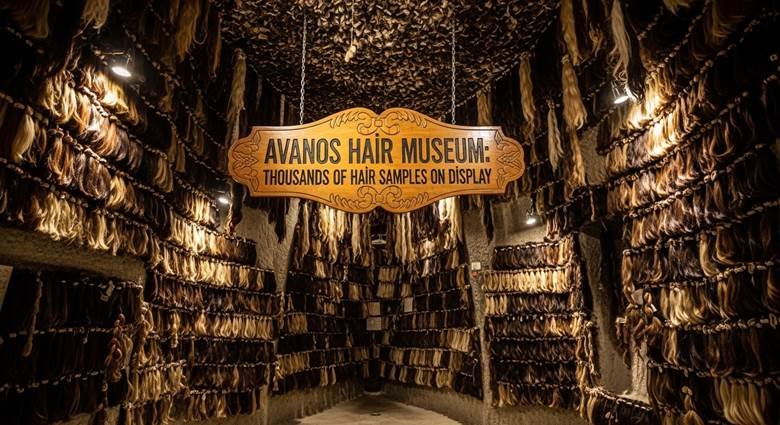
Avanos Hair Museum: Thousands of Hair Samples on Display
Location: Avanos, Turkey
What It Is: A cave with over 16,000 locks of human hair hanging from the ceiling
Started: 1979
Entry Method: Stairs descending into an underground cave
The Story
In 1979, a local potter named Chez Galip had a female friend who was leaving town. She cut a lock of her hair and asked him to keep it as a memento. He hung it in his pottery workshop cave.
Other women heard the story. They started leaving locks of their hair too. And it didn’t stop.
Today, the Avanos Hair Museum contains over 16,000 samples of hair from women around the world, all hanging from the cave ceiling with names and addresses attached.
Why It’s Weird
Let’s be clear: this is deeply strange. Imagine descending into an underground cave and seeing thousands upon thousands of hair samples dangling above you, each with a little tag identifying its donor.
The museum holds twice-yearly “lotteries” where Chez Galip randomly selects names from the hair samples. Winners receive free pottery and an invitation to visit Avanos with all-expenses-paid accommodation.
The Experience
You walk down stairs into the cave. You look up. The entire ceiling is covered—completely covered—with locks of human hair in every color imaginable. Some are long. Some are short. Some are curly. All are slightly unsettling.
Cultural Context: In Turkey, the museum is viewed as romantic and whimsical. Internationally, reactions range from “fascinating” to “deeply creepy” to “absolutely not.”
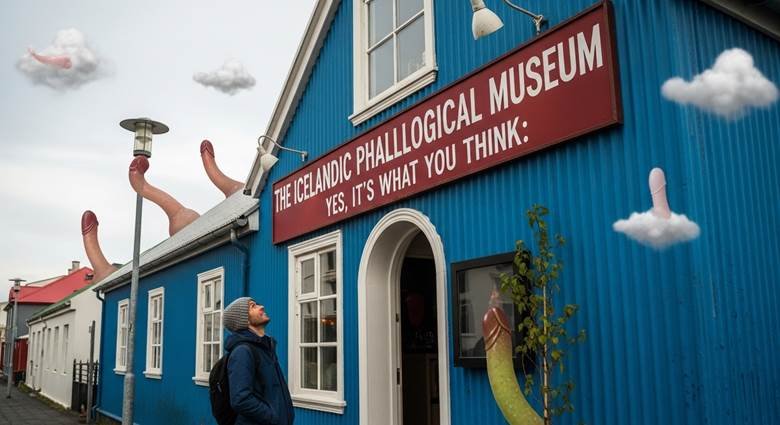
The Icelandic Phallological Museum: Yes, It’s What You Think
Location: Reykjavik, Iceland
What It Is: The world’s only museum dedicated to male anatomy
Founded: 1997
Number of Specimens: Over 200
Annual Visitors: Approximately 11,000
The Story
In 1974, Icelandic historian Sigurður Hjartarson received a bull’s penis as a gag gift. Instead of being insulted, he got interested. He wondered: how many different types exist?
He started collecting. By 1997, he had enough specimens to open a museum. Today, it holds over 200 specimens from 93 different mammal species.
Why It’s Weird
This is the world’s only museum dedicated entirely to phallology (the scientific study of male anatomy). The collection includes specimens from:
- Whales (some over 5 feet long)
- Seals and walruses
- Land mammals including hamsters, mice, and elephants
- A human donor (displayed after his death)
The museum takes a scientific approach, treating the subject as zoology and biology rather than comedy. Information panels explain evolutionary adaptations, mating behaviors, and anatomical variations across species.
The Experience
The museum is surprisingly educational and professional. Specimens are preserved in formaldehyde or dried and mounted. Labels explain scientific facts. It’s weird, yes, but also genuinely informative about animal biology and evolution.
Media Attention: The museum gained international fame from a 2012 documentary called “The Final Member,” about the quest to obtain a human specimen for the collection.
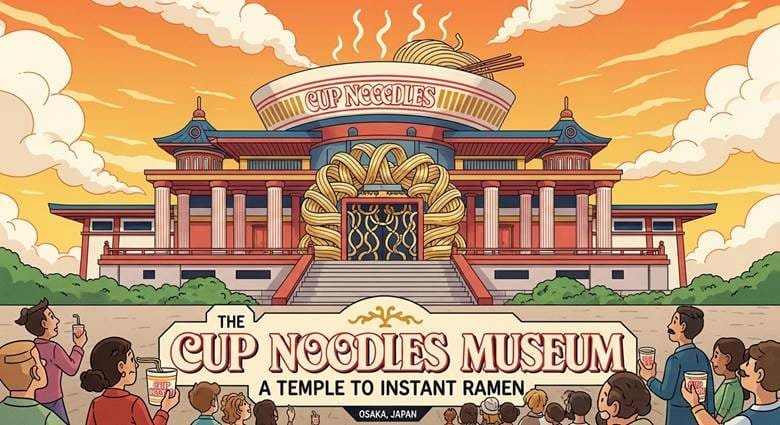
The Cup Noodles Museum: A Temple to Instant Ramen
Location: Ikeda and Yokohama, Japan
What It Is: Museums celebrating instant noodles
Founded: Ikeda location opened 1999; Yokohama in 2011
Dedicated To: Momofuku Ando, inventor of instant noodles
The Story
In 1958, Momofuku Ando invented instant ramen after months of experimentation in his backyard shed. This invention changed food history. By 1971, he’d invented Cup Noodles—instant ramen in a cup that just needed hot water.
Today, billions of packages of instant noodles are consumed worldwide annually. These museums pay tribute to Ando’s invention.
Why It’s Special
The Cup Noodles Museum isn’t weird in a creepy way—it’s weird because it makes instant noodles genuinely fascinating. The museums feature:
- Instant Noodles History Cube: A tunnel with walls displaying over 800 instant noodle packages from around the world
- My CUPNOODLES Factory: An interactive station where you design your own Cup Noodles package and select ingredients
- Chicken Ramen Factory: Make instant noodles from scratch
- Tasting Room: Sample instant noodles from around the world
- Theater: Shaped like a giant noodle cup, showing the history of instant noodles
The Experience
The museums recreate 1958 Tokyo (when instant noodles were invented) complete with period-accurate storefronts and décor. There are interactive exhibits for kids and adults. You can design custom Cup Noodles packaging and watch noodles being made.
Cultural Impact: Instant noodles are credited with helping Japan recover economically after WWII by providing affordable, shelf-stable food. Ando is considered a national hero.
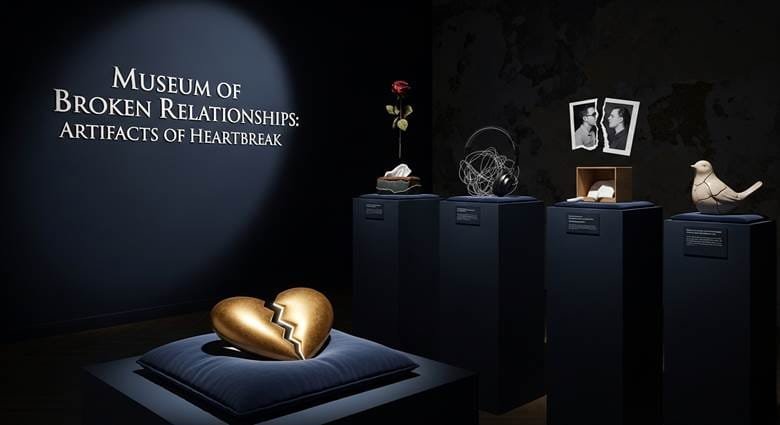
Museum of Broken Relationships: Artifacts of Heartbreak
Location: Zagreb, Croatia (with traveling exhibitions)
What It Is: A museum displaying items from failed relationships
Founded: 2006
Award: Kenneth Hudson Award (Europe’s most innovative museums)
The Story
In 2003, Croatian artists Olinka Vištica and Dražen Grubišić broke up. They joked about creating a museum for items from their relationship. The joke became serious.
In 2006, they launched the Museum of Broken Relationships as a traveling exhibition. By 2010, it had a permanent home in Zagreb. Today, it’s one of Croatia’s most visited museums.
Why It’s Unique
People from around the world donate items from their failed relationships, along with descriptions explaining the story. Items include:
- Teddy bears from broken engagements
- Letters never sent
- A garden gnome hurled in anger during a divorce
- An axe a woman used to dismantle her ex’s furniture
- A prosthetic leg left behind when a partner literally hopped away
- A bra from a woman marking the end of her relationship with her breasts post-mastectomy
- A tiny bottle filled with tears
Each item comes with an anonymous confession explaining its significance.
The Experience
Walking through the museum is emotional. Some stories are funny. Some are heartbreaking. Some are cathartic. There’s a communal sense of “we’ve all been through this.”
At the end, you face a mirror and write your thoughts in a guest book—literally reflecting as you write.
Therapeutic Value: Many visitors report feeling less alone after visiting. The museum normalizes heartbreak and provides perspective that everyone experiences relationship pain.
The Museum of Burnt Food: Charred Culinary Disasters
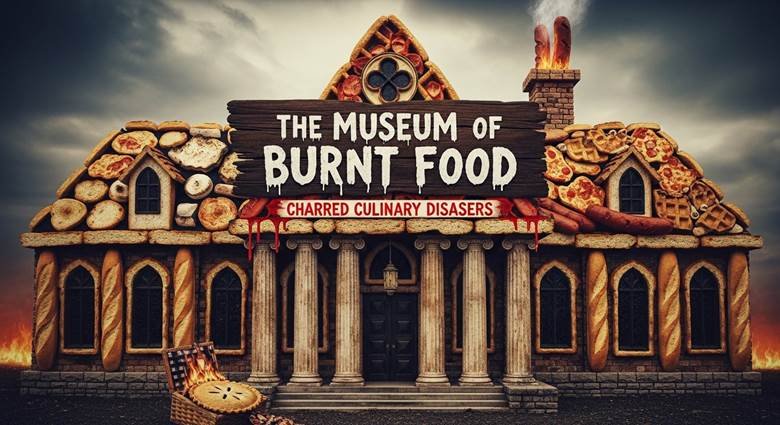
Location: Arlington, Massachusetts, USA
Founded: Late 1980s
Founder: Deborah Henson-Conant
Motto: “Honoring culinary disasters”
The Story
In the late 1980s, musician Deborah Henson-Conant kept accidentally burning food. Instead of throwing it away in shame, she started collecting it. Eventually, she had enough burnt food to open a museum.
Why It’s Weird
This is a museum dedicated entirely to food people accidentally ruined. The collection includes:
- Burnt toast (multiple varieties)
- Completely charred pies
- Blackened meat and fish
- Incinerated vegetables
- Cookies turned to charcoal
Each item is displayed with information about how it was burnt and what the person was doing when they forgot about it.
The Philosophy
The museum celebrates human imperfection. Everyone burns food sometimes. The museum says: “It’s okay. Join the club. Here’s proof that you’re not alone.”
Visitor Experience: People often arrive curious and leave laughing at their own kitchen disasters. It’s therapeutic and funny.
The Cockroach Hall of Fame: Insects in Costumes
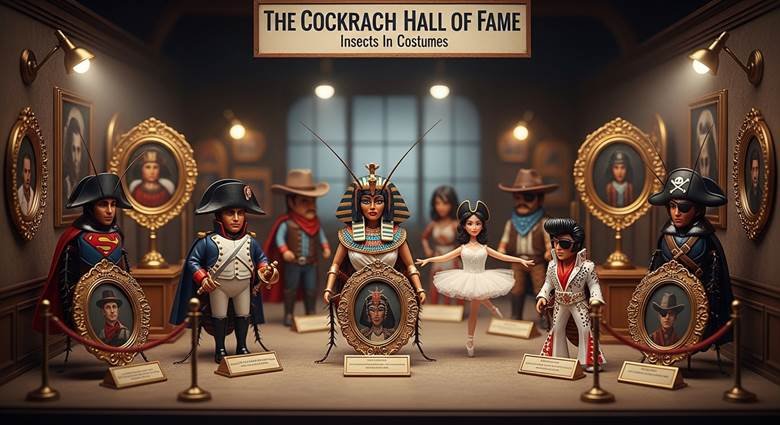
Location: Plano, Texas, USA
Founded: 1980s
Created By: Michael Bohdan, an exterminator
Number of Displays: Dozens of costumed cockroaches
The Story
Michael Bohdan was a pest control professional who got creative. In the 1980s, he started a contest to find the biggest cockroach. Then he had another idea: what if he dressed dead cockroaches in tiny costumes?
The Cockroach Hall of Fame was born.
What You’ll See
Dead cockroaches dressed as:
- Famous celebrities
- Historical figures
- Characters from movies and TV
- Tiny scenes and dioramas
Each cockroach is carefully positioned and dressed in miniature clothing. Some displays are surprisingly elaborate.
Why People Visit
It’s bizarre. It’s surprisingly well-done. And it’s absolutely hilarious. The museum doesn’t take itself seriously, and visitors love it.
Location Note: The museum is inside a pest control business, which makes perfect sense and also makes it funnier.
The International UFO Museum: Roswell’s Legacy
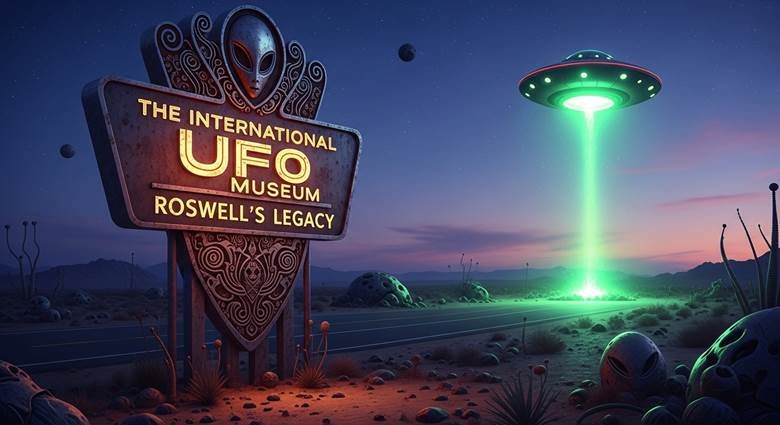
Location: Roswell, New Mexico, USA
Founded: 1991
Focus: Extraterrestrials, UFOs, and the 1947 Roswell Incident
Annual Visitors: Over 200,000
The Story
In 1947, something crashed on a ranch near Roswell, New Mexico. The US military initially said it was a “flying disc,” then changed the story to a weather balloon. Conspiracy theories exploded.
In 1991, the International UFO Museum and Research Center opened to investigate the incident and document UFO-related phenomena worldwide.
What’s Inside
- Roswell Incident Exhibits: Detailed information about the 1947 crash, including witness testimony, military documents, and conspiracy theories
- UFO Bibliography Room: Extensive library of books and research on extraterrestrial topics
- Crop Circle Gallery: Images and information about crop circles allegedly created by aliens
- Alien Autopsy Display: Recreation of the controversial “alien autopsy” video
- International UFO Reports: Documentation of UFO sightings from around the world
Why It’s Fascinating
Whether you believe in aliens or not, the museum is incredibly detailed. It presents evidence, theories, and testimonies without being overly credulous or dismissive. The research is thorough, the exhibits are professional, and the whole experience makes you think.
Cultural Impact: Roswell has become synonymous with UFO culture. The museum attracts believers, skeptics, and curious tourists alike. The town hosts an annual UFO Festival every July that draws thousands of visitors.
What These Unusual Museums Around the World Teach Us
After exploring these unusual museums around the world, some interesting patterns emerge:
Passion Creates Everything
Every strange museum started with someone who cared deeply about something most people ignore. That passion is contagious. When you visit, you start caring about things you never thought about before.
Weird Is Relative
What seems bizarre to one culture might seem normal to another. The hair museum is romantic in Turkey but creepy elsewhere. Context matters.
Collections Tell Stories
Behind every collection is a human story. The ventriloquist museum preserves a dying art form. The broken relationships museum helps people heal. The burnt food museum celebrates imperfection.
Museums Don’t Have to Be Serious
Traditional museums can be intimidating. These places are approachable, fun, and memorable. They prove that education and entertainment aren’t mutually exclusive.
Niche Communities Exist Everywhere
For every weird museum, there’s a community of people who REALLY care about that subject. These museums connect those people and validate their interests.
Planning Your Strange Museum Tour
Want to visit some of these places? Here’s what you need to know:
North American Museums
Easy to Visit:
- Museum of Bad Art (Massachusetts) – Public gallery in a brewery
- Vent Haven Museum (Kentucky) – By appointment, May-September
- Cockroach Hall of Fame (Texas) – Inside pest control business
- International UFO Museum (New Mexico) – Open year-round
- Cup Noodles Museum (There’s one in Osaka and one in Yokohama, Japan)
European Museums
Accessible:
- Museum of Broken Relationships (Zagreb, Croatia) – Regular hours
- Icelandic Phallological Museum (Reykjavik, Iceland) – Regular hours
- Avanos Hair Museum (Turkey) – Open when the pottery workshop is open
International Adventures
Worth the Trip:
- Cancun Underwater Museum (Mexico) – Snorkeling/diving tours available daily
- Cup Noodles Museums (Japan) – Both locations open regularly
Planning Tips
- Check hours carefully – Many unusual museums have limited hours or require appointments
- Book ahead – Some (like Vent Haven) require advance booking
- Combine with other attractions – Many of these are in areas with other things to see
- Bring a sense of humor – These museums are meant to be fun
- Take photos – You’ll want evidence that these places exist
Interactive Challenge: Which Museum Would You Visit?
Time for a fun decision! Based on your personality, which weird museum should you visit?
Museum Personality Quiz
Answer these questions:
□ Do you like things that are creepy?
□ Do you enjoy underwater activities?
□ Do you appreciate art (even bad art)?
□ Are you fascinated by human psychology?
□ Do you love food (even burnt food)?
□ Are you interested in history?
□ Do you believe in aliens?
□ Are you a fan of quirky humor?
□ Do you like interactive exhibits?
□ Are you brave enough to visit really weird places?
If you checked 7+ boxes: You’re ready for the Vent Haven Museum (the creepiest)
If you checked 5-6 boxes: Start with the Museum of Bad Art (the funniest)
If you checked 3-4 boxes: Try the Cup Noodles Museum (the most accessible)
If you checked fewer than 3: Maybe stick with traditional museums… for now
Bonus Question: Which museum on this list would you absolutely refuse to visit? Share in the comments!
Frequently Asked Questions
Are these museums real, or are you making this up?
They’re 100% real! Every museum on this list exists and can be visited (some by appointment). Check their official websites or search for them online—they all have verified locations and visitor information.
Why do people create weird museums?
Usually, it starts with a personal passion or collection that grows too large to keep private. Sometimes it’s to preserve a dying art form (ventriloquism). Other times it’s pure obsession (hair museum). Often, it’s to make people smile (burnt food museum).
Are unusual museums expensive to visit?
Most are surprisingly affordable. Many charge $5-15 admission, some are free, and a few (like the Underwater Museum) require tour costs but are comparable to other tourist activities. The Vent Haven Museum runs on donations.
Can I donate items to these museums?
Some accept donations (especially the Museum of Broken Relationships), while others have closed collections. Contact museums directly if you have items you think they’d want.
Are these museums appropriate for children?
It depends on the museum and the child. The Cup Noodles Museum is perfect for kids. The Phallological Museum is scientific but might raise questions. The Hair Museum might creep out some kids. Use judgment based on your child’s personality.
Do these museums take themselves seriously?
Some do (the UFO Museum presents serious research), while others embrace the absurdity (Museum of Bad Art, Burnt Food Museum). Most fall somewhere in between—acknowledging the weirdness while genuinely celebrating their subject.
How do these museums stay in business?
Through admission fees, donations, gift shop sales, and sometimes attachment to other businesses (like the Museum of Bad Art being in a brewery, or the Cockroach Hall of Fame in a pest control office).
The Bottom Line
These 10 unusual museums around the world prove that you don’t need Renaissance paintings or ancient artifacts to create something worth visiting. Sometimes the most memorable museums celebrate the weird, the forgotten, the bizarre, or the just plain strange.
The Vent Haven Museum preserves ventriloquism history (while giving you nightmares). The Cancun Underwater Museum combines art with marine conservation. The Museum of Bad Art celebrates spectacular failure. The Hair Museum… well, the Hair Museum exists, and that’s enough.
These places matter because they:
- Preserve unusual aspects of human culture
- Make us laugh and think
- Connect us with niche communities
- Create unforgettable travel experiences
- Prove that passion can turn anything into something meaningful
So the next time you’re planning a trip, skip the obvious tourist attractions. Find the weirdest museum in the area. Visit it. Experience it. Share the story.
Because the strangest unusual museums around the world often provide the best travel stories, the most unique experiences, and the most memorable days.
Which weird museum will you visit first?
About This Article: This guide explored 10 of the strangest unusual museums around the world, with all facts verified through museum official websites, travel publications (National Geographic, Atlas Obscura, The Culture Trip), and visitor documentation. All museum locations, founding dates, collection sizes, and descriptions are factual and current as of 2025.
Want to find more weird museums? Check out Atlas Obscura, Roadside America, and local tourism boards for hidden gem attractions in areas you’re visiting.
All facts verified from authentic sources including museum official websites, National Geographic Travel, Atlas Obscura, The Culture Trip, Explore magazine, and visitor documentation. No fictional or speculative information presented as fact.